
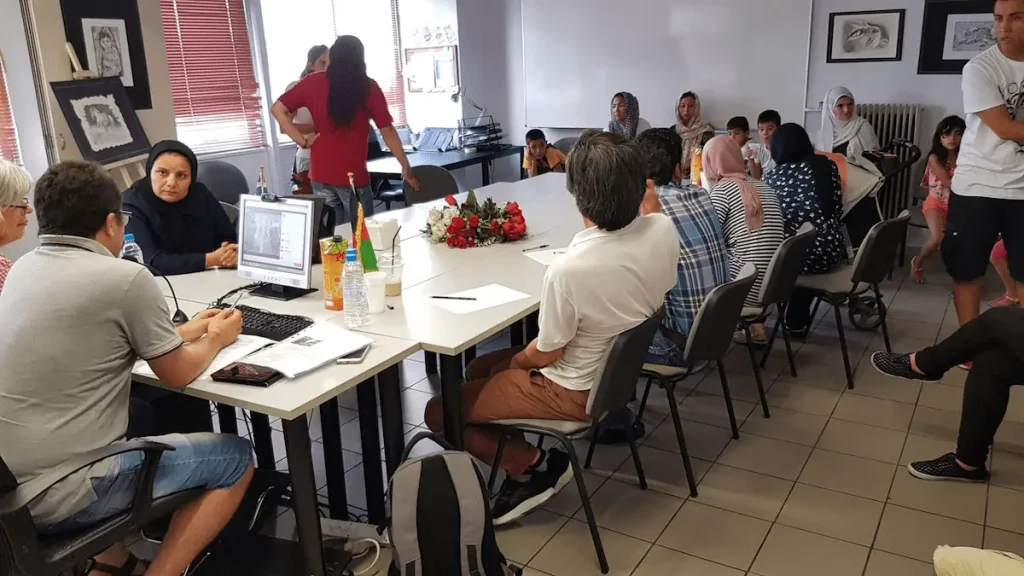
Legal assistance in Greece: understanding your rights and getting support
Legal assistance for Afghan refugees in Greece: this guide explains the asylum process, procedures, documents, rights, and useful support available in Greece.
Several specialised organisations can help you free of charge to:understand your rightsprepare your asylum filelodge an appealobtain your documentsapply for family reunification
This guide presents the key steps and the main support services available for Afghan refugees and asylum seekers in Greece.
1. Understanding the asylum procedure in Greece
The asylum procedure officially begins when you are registered with the Greek Asylum Service.
After registration, you receive a PAAYPA number, which proves that your procedure is ongoing.
Main steps
- Registration fingerprints, photo, personal information
- Registration official interview with an officer from the Asylum Service
- Decision :
- refugee status
- subsidiary protection
- rejection (with the possibility to appeal)
Your rights during the procedure
- The right to an interpreter in your language
- The right to an free lawyer (through certain NGOs)
- The right to access healthcare through your PAAYPA number
- The right to hold a asylum card valid
- In some cases, the right to a travel document.
2. Free legal assistance: organisations that can support you
Several NGOs offer full legal support, from registration to appeals.
Main NGOs
- Greek Council for Refugees (GCR) asylum, appeals, detention, family reunification
- UNHCR Greece information, legal orientation, support to access the right services
- SolidarityNow legal, social and psychological support (Athens, Thessaloniki)
- METAdrasi interpretation, protection of minors, complex cases
- HIAS Greece complex asylum files and appeals
- Refugee Legal Support (RLS) Dublin procedures, family reunification, appeals
Types of services provided
- Preparation for theasylum interview.
- Help with missing or incomplete documents.
- Basic advice on your rights.
- Support for appeals.
- Help with unaccompanied minors.
- Support in cases violence or danger.
3. Important documents to keep
Always keep copies of: paper and digital :
- PAAYPA or asylum card
- Passport or identity document
- Decisions from the Asylum Service
- Medical certificates and school documents
- Family proofs (family book, certificates, etc.)
- Address and housing documents
- Updated AMKA / PAAYPA
Tip: store your documents in a secure online space and in a physical folder.
4. What should you do if your application is rejected?
A negative decision is not the end of your rights.
Appeal
- The deadline is very short (often 10 days).
- Contact a immediately. specialised lawyer.
- NGOs such as GCR, SolidarityNow or HIAS can help you.
Why file an appeal?
- To correct errors in your file.
- To present new evidence..
- To protect your rights while the procedure continues.
Never stay alone after a rejection. Seek help as quickly as possible.
5. Family reunification in Europe (Dublin III)
If you have family in another European country, you can sometimes apply for family reunification..
Common conditions
- Children, parents, spouse, or dependent brothers and sisters.
- Family proof: official documents, photos, messages, certificates, etc.
NGOs that can help
- GCR
- HIAS
- METAdrasi
- UNHCR
6. After recognition: your new rights
If you obtain refugee status or subsidiary protectionyou may be entitled to:
- Residence permit
- Permanent AMKA
- Full access to healthcare.
- Right to work legally.
- Access to the programme HELIOS (housing, employment, Greek lessons)
- Possibilities to travel,depending on your status
- Access to education,training, and social services
7. Key tips
- Write down all your dates and appointments..
- Never sign a document you don’t understand.
- Always ask for an interpreter if needed.
- Keep copies of everything.
- Contact an NGO as soon as you feel lost or unsafe.
Summary
The Greek legal system can seem complex, but you are not alone.
Professional organisations can support you free of charge with asylum, appeals, family reunification and your fundamental rights.
Knowing your rights and asking for help at the right time can really change your situation and strengthen your safety, autonomy and dignity.
